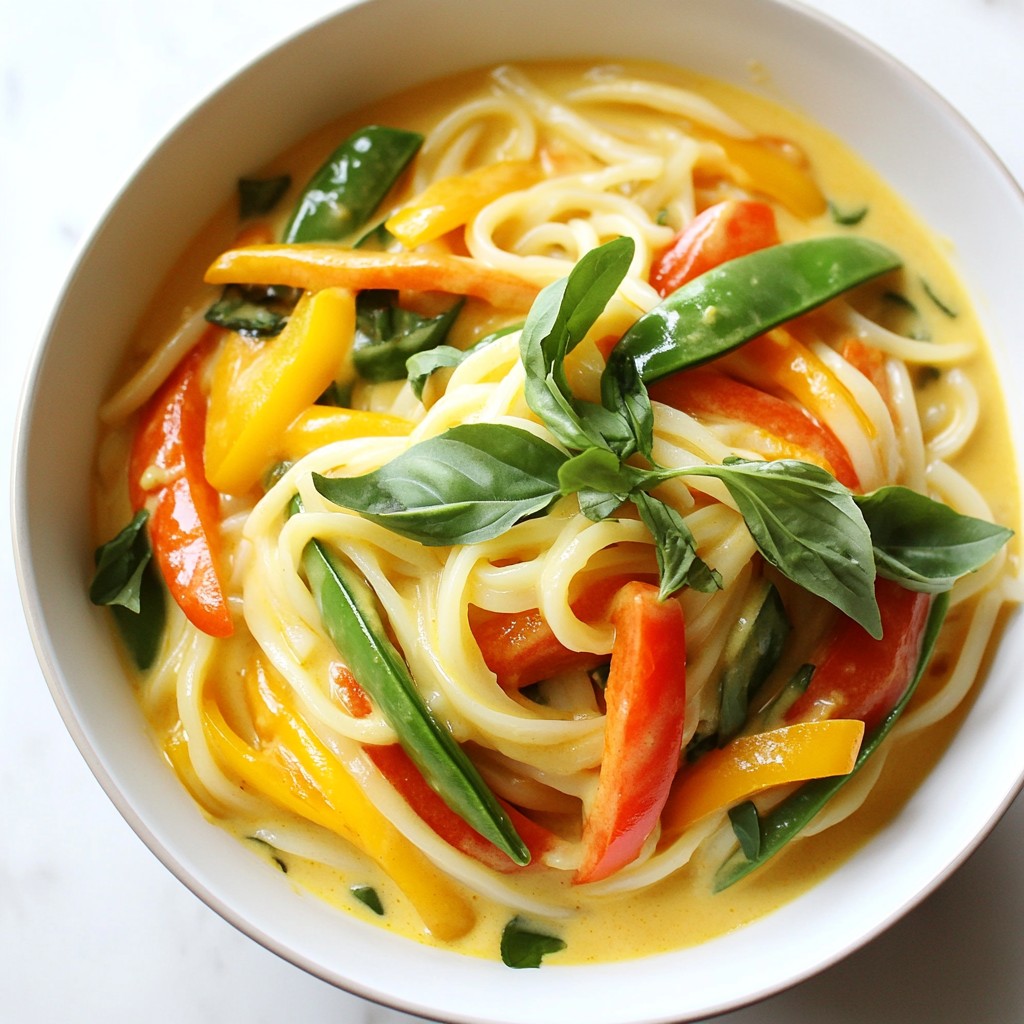
Craving a quick, flavorful meal? You’ll love my 5-Ingredient Thai Coconut Curry Noodles! With just five simple items, you can whip up a dish that’s both satisfying and tasty. I’ll guide you step-by-step to make this easy delight. Plus, you’ll find tips for personalizing it and making it fit your diet. Let’s dive into this simple recipe that will impress your family and friends!
Why I Love This Recipe
- Quick and Easy: This recipe comes together in just 20 minutes, making it perfect for a busy weeknight dinner.
- Flavorful Sauce: The combination of coconut milk and red curry paste creates a rich and creamy sauce that’s bursting with flavor.
- Customizable: You can easily swap in your favorite vegetables or proteins, tailoring the dish to your taste.
- Healthy and Satisfying: This dish is packed with nutrients from the vegetables and provides a filling meal without being heavy.
Ingredients
List of Essential Ingredients
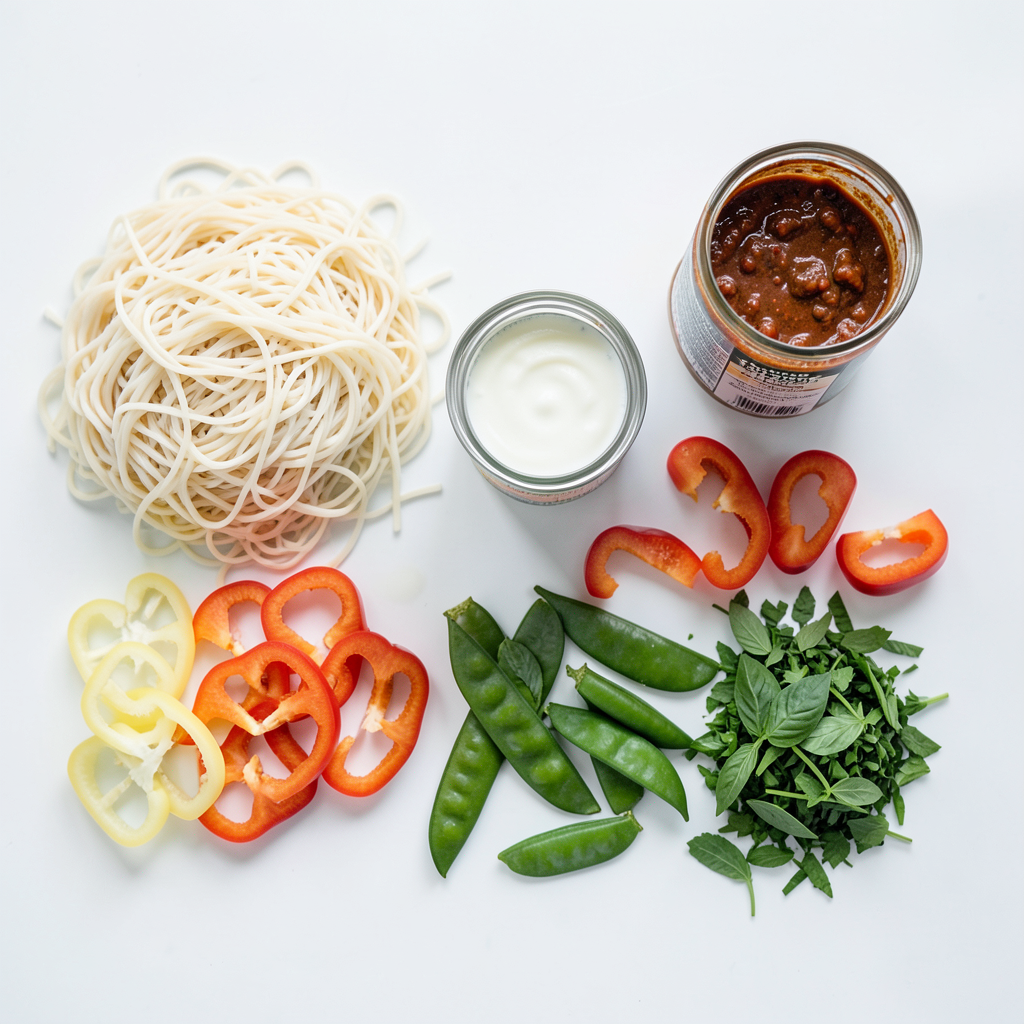
To make your 5-Ingredient Thai Coconut Curry Noodles, gather these key items:
- 8 oz rice noodles
- 1 can (13.5 oz) coconut milk
- 2 tablespoons red curry paste
- 1 cup mixed vegetables (bell peppers, carrots, snap peas)
- 1 tablespoon fresh basil, finely chopped
These ingredients create a rich and creamy dish. The rice noodles soak up the flavors well, making every bite delicious.
Optional Add-ins
You can personalize your meal with these optional add-ins:
- Chili flakes for extra heat
- Lime slices for a fresh zing
- Cooked protein like tofu or chicken
These add-ins enhance taste and texture, giving you room to explore your culinary creativity.
Dietary Considerations
This dish is naturally vegan and gluten-free if you use gluten-free noodles. The coconut milk provides healthy fats and a creamy base. If you have specific dietary needs, adjust the vegetables or add-ins to suit your preferences. Always check labels for hidden allergens in packaged products.
Step-by-Step Instructions
Cooking the Rice Noodles
Start by filling a large pot with water. Bring it to a rapid boil. Add the rice noodles and cook them for about 4-6 minutes. You want them to be al dente. Drain the noodles in a colander and put them aside. This step is easy and crucial for the dish's texture.
Preparing the Coconut Curry Sauce
In the same pot, reduce the heat to medium. Pour in the coconut milk and whisk in the red curry paste. Mix until they blend well. Heat this for about 2-3 minutes. Stir continuously to avoid lumps. This sauce will be creamy and full of flavor.
Adding and Cooking the Vegetables
Next, add your mixed vegetables to the pot. Make sure they get well coated in the curry sauce. Let the mixture simmer for about 5 minutes. You want the veggies to be tender but still bright. This step adds color and crunch to your dish.
Combining Noodles with Sauce
Gently add the drained noodles back into the pot. Use tongs or a spatula to toss everything together. Make sure the noodles are coated in the sauce. Cook for another 1-2 minutes to heat everything through. This step ensures the noodles soak up the delicious flavors.
Final Touches and Serving
Remove the pot from the heat. Fold in the chopped fresh basil for extra flavor. Serve the dish hot in bowls. You can garnish with more basil or a sprinkle of chili flakes. This adds a nice touch for those who like heat. For a fancy look, drizzle some extra coconut milk on top!
Tips & Tricks
Perfecting the Noodle Texture
To get the best noodle texture, follow a few simple steps. First, use plenty of water in your pot. This helps the noodles cook evenly. When you add the rice noodles, stir them gently. This keeps them from sticking together. Cook them until they are al dente, meaning they are firm but not hard. Drain the noodles, but don’t rinse them. Rinsing removes the starch that helps the sauce stick.
Enhancing Flavor with Fresh Herbs
Fresh herbs make a big difference in flavor. I love adding fresh basil to my dish. It gives a bright taste that pairs well with coconut. You can also try cilantro or mint for different flavors. Just chop them finely and mix them in right at the end. This keeps their flavor fresh and strong. For a kick, sprinkle some chili flakes on top when serving.
Substitutions for Common Ingredients
Don’t worry if you can’t find all the ingredients. You can swap some out for what you have. If you don’t have rice noodles, try spaghetti or even zucchini noodles. For vegetables, use what you like best. Broccoli, mushrooms, and spinach all work well. If you can’t find red curry paste, yellow or green curry paste can also be good alternatives. Just remember, this dish is about making it your own!
Pro Tips
- Fresh Ingredients: Use fresh vegetables and herbs for a more vibrant flavor and texture in your curry.
- Adjusting Heat: If you prefer a milder dish, start with less red curry paste and gradually add more to taste.
- Cooking Noodles: Be sure not to overcook the rice noodles; they should be al dente to hold up well in the sauce.
- Flavor Boost: Squeeze some fresh lime juice over the finished dish for an extra layer of flavor that complements the curry.
Variations
Protein Additions (e.g., tofu, chicken)
You can easily change this dish by adding protein. Tofu is a great choice if you want a vegetarian meal. Just cut it into cubes and pan-fry it until golden. Add it to the curry sauce with the veggies. Chicken works well too. Use boneless chicken thighs or breasts. Cook them in the pot before adding the coconut milk, then follow the same steps.
Vegetarian and Vegan Options
This recipe is already vegetarian with rice noodles and veggies. To make it vegan, ensure your red curry paste is free from fish sauce. You can check the label or make your own at home. For added flavor, try using mushrooms or eggplant. They soak up the curry sauce nicely and add depth to your dish.
Gluten-Free Alternatives
If you need a gluten-free option, rice noodles are perfect. They are naturally gluten-free. Make sure to check your curry paste for any gluten content. You can also use spiralized zucchini or other vegetables as a noodle substitute. They add a fresh twist and keep the dish light.
Storage Info
Best Practices for Storing Leftovers
To keep your Thai coconut curry noodles fresh, store them in an airtight container. Let the noodles cool down first. This helps retain their texture. Place the container in the fridge. They will stay good for up to three days. If you plan to eat them later, keep the sauce separate. This way, the noodles won't get too soggy.
Reheating Instructions
When you're ready to enjoy the leftovers, reheat them gently. Add a splash of water or coconut milk to a pan. Heat it over medium-low heat. Stir the noodles and sauce until hot. You can also use a microwave. Just cover the bowl with a damp paper towel. Heat in short bursts, stirring in between, until hot.
Freezing Guidelines
If you want to save some noodles for later, freezing is an option. Place the cooled noodles in a freezer-safe bag. Remove as much air as possible. They can be frozen for up to a month. However, the texture might change slightly after thawing. To use frozen noodles, let them thaw in the fridge overnight. Reheat as mentioned above for the best results.
FAQs
Can I make this recipe ahead of time?
Yes, you can make this recipe ahead. Cook the noodles and sauce separately. Store them in airtight containers. When ready to eat, heat them together in a pot. This keeps the noodles from getting soggy.
How do I adjust the spiciness?
To adjust the spiciness, start with less red curry paste. You can add more later if needed. For extra heat, sprinkle chili flakes on top before serving. Taste as you go to find your perfect level.
What types of vegetables work best?
You can use many vegetables in this dish. Bell peppers, carrots, and snap peas are great choices. Other options include broccoli, zucchini, or baby corn. Choose ones you enjoy for added flavor and texture.
Can I use a different type of noodle?
Yes, feel free to use different noodles! Rice noodles are great, but you can try egg noodles or whole wheat noodles too. Just adjust the cooking time to ensure they’re tender but not mushy.
Is this recipe kid-friendly?
Absolutely! This recipe is kid-friendly. The creamy coconut milk balances the spices well. You can also reduce the red curry paste for a milder taste. Kids often love the fun colors and flavors in this dish.
This post covered essential ingredients and step-by-step cooking instructions for a tasty dish. You learned about perfecting noodle texture, adding protein, and exciting variations. Remember to follow storage tips for leftovers and reheating. You can make this recipe your own with your favorite veggies or spice level. Enjoy exploring different options and make this meal a staple for your table. With simple steps, you can create a delicious meal that suits everyone’s taste.