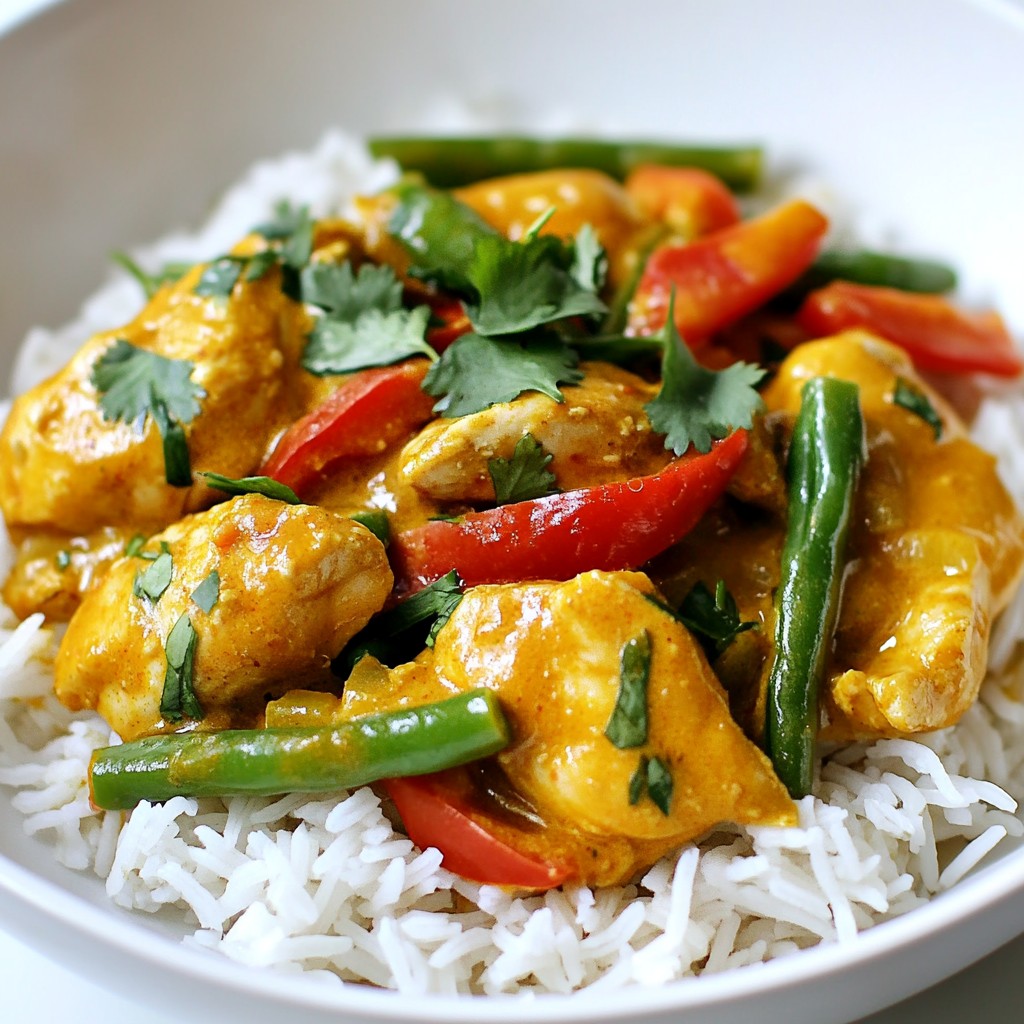
If you crave a dish that bursts with flavor and is simple to make, you're in the right spot! In this Coconut Curry Chicken recipe, I’ll guide you through using tender chicken thighs, rich coconut milk, and vibrant spices. You'll easily whip up a comforting meal that’s packed with taste. Perfect for weeknight dinners, this dish will impress your family and friends. Ready to cook? Let’s get started!
Why I Love This Recipe
- Bold Flavors: This dish combines the rich creaminess of coconut milk with the vibrant spices of red curry, creating a tropical explosion of taste that dances on your palate.
- Quick and Easy: With a prep time of just 15 minutes, this recipe is perfect for busy weeknights while still delivering a satisfying and hearty meal.
- Colorful Ingredients: The vibrant colors of the bell peppers and green beans not only make the dish visually appealing but also add a variety of nutrients.
- Customizable: Feel free to swap in your favorite vegetables or adjust the spice level to suit your taste, making this curry as unique as you are!
Ingredients
Main Ingredients
- 1.5 lbs boneless, skinless chicken thighs
- 1 can (13.5 oz) coconut milk
- 2 tablespoons red curry paste
Vegetables and Aromatics
- 1 tablespoon fresh ginger, grated
- 3 cloves garlic, minced
- 1 medium onion, chopped
- 1 bell pepper (red or yellow), sliced into thin strips
- 1 cup green beans, trimmed and sliced into smaller segments
Seasonings and Garnishes
- 2 tablespoons fish sauce
- 1 tablespoon brown sugar
- 1 tablespoon fresh lime juice
- Fresh cilantro leaves, for garnish
- Cooked jasmine rice, for serving
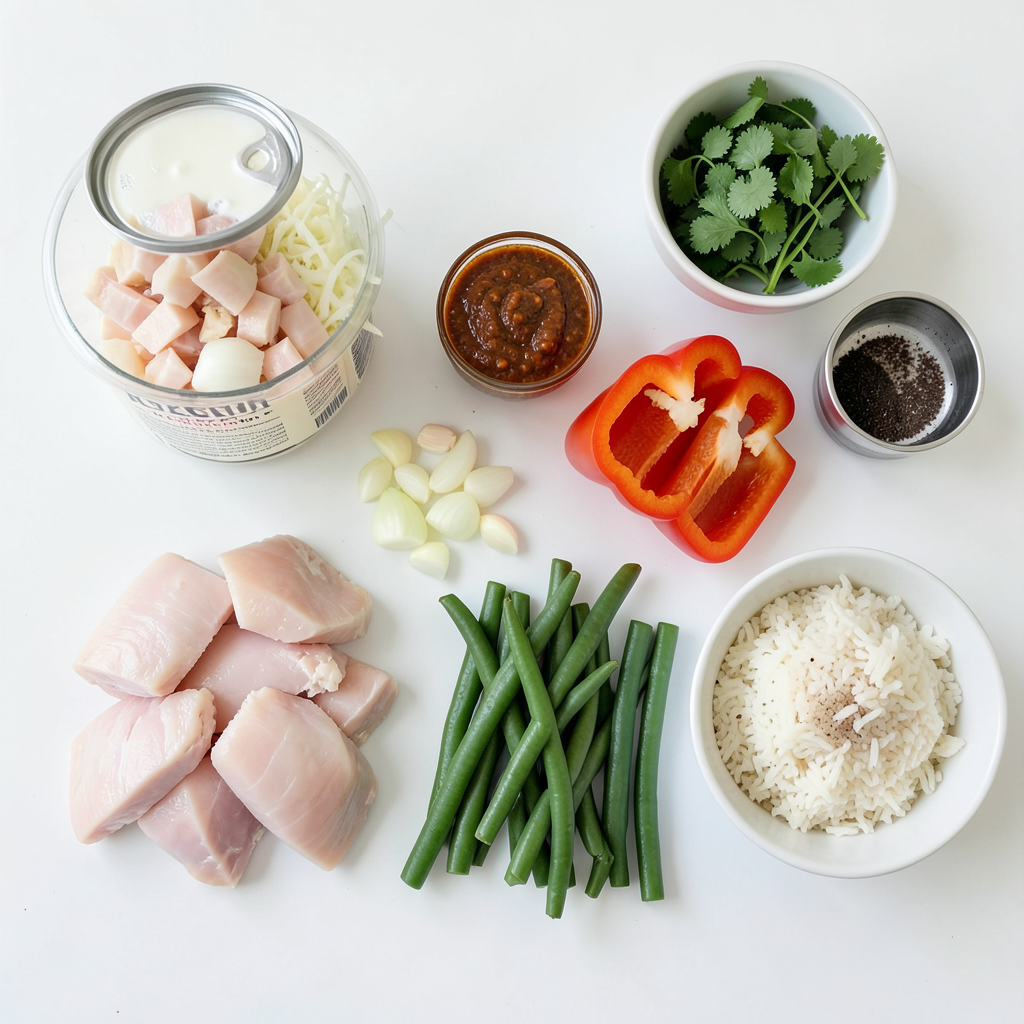
Coconut Curry Chicken shines with its vibrant mix of flavors. First, the chicken thighs provide a tender and juicy base. They soak up all the rich tastes from the curry. The coconut milk adds a creamy texture and sweetness that balances the heat from the red curry paste.
For veggies, I love adding fresh ginger and garlic. These aromatics boost the dish with warmth and depth. Onions bring sweetness, while bell peppers and green beans add crunch and color.
To finish, seasonings like fish sauce and brown sugar create layers of flavor. A splash of lime juice brightens the curry, and fresh cilantro gives it a fresh kick. Serve it all over fluffy jasmine rice for the perfect meal.
Step-by-Step Instructions
Preparing the Aromatics
To start, heat a splash of oil in a large skillet over medium-high heat. Once the oil shimmers, add the chopped onion. Sauté for about 3-4 minutes until the onion turns translucent. This step builds a nice base for your curry. Next, add the minced garlic and grated ginger. Stir continuously for about 1 minute. This releases lovely aromas that will make your kitchen smell amazing.
Cooking the Chicken
Now it's time to cook the chicken. Add the bite-sized chicken pieces to the skillet. Season them generously with salt and pepper. Cook the chicken for 5-6 minutes, stirring occasionally. You want the chicken nicely browned on all sides. This step adds depth to the flavor and keeps the chicken juicy.
Building the Curry
Once the chicken is browned, incorporate the red curry paste into the skillet. Make sure each piece of chicken is coated well. Cook for an additional 2-3 minutes. This allows the spices to develop and enhances the dish. Now, gently pour in the coconut milk, followed by the fish sauce and brown sugar. Stir everything together and bring it to a gentle simmer.
Finalizing the Dish
Now for the fun part! Add the sliced bell pepper and green beans to the skillet. Stir to combine everything well. Let the curry simmer for another 5-7 minutes. This cooks the vegetables and ensures the chicken is fully cooked. Stir in the fresh lime juice. Taste your curry and adjust the seasoning with more salt and pepper if needed. Once you’re happy with the taste, turn off the heat. Serve the curry hot over fluffy jasmine rice, and garnish with fresh cilantro leaves for a pop of flavor and color. Enjoy your delicious Coconut Curry Chicken!
Tips & Tricks
Flavor Enhancements
To deepen the coconut flavor, use full-fat coconut milk. This adds creaminess and richness. You can also add a splash of coconut cream for an extra layer. For seasoning adjustments, taste as you cook. Add salt, lime juice, or fish sauce to balance flavors.
Cooking Techniques
Stirring is key when cooking your chicken. Keep it moving to avoid sticking. Simmer the curry gently to let the flavors blend well. To avoid overcooked chicken, cook until just done. This keeps the meat juicy and tender.
Presentation Ideas
For a stunning dish, serve your curry over fluffy jasmine rice. Use a wide bowl to show off the colors. Garnish with fresh cilantro leaves for a vibrant touch. This adds both flavor and visual appeal to your meal.
Pro Tips
- Use Fresh Ingredients: Fresh ginger and garlic will enhance the flavor of your curry significantly. Opt for whole ingredients whenever possible for the best taste.
- Adjust the Spice Level: If you prefer a milder curry, start with half the amount of red curry paste and gradually add more until you reach your desired heat level.
- Vegetable Variations: Feel free to add other vegetables like zucchini, spinach, or carrots to the curry for added nutrition and color.
- Garnishing: Fresh cilantro adds a bright flavor to the dish. For an extra burst of freshness, consider adding a squeeze of lime just before serving.
Variations
Vegan Option
To make this dish vegan, you can swap chicken for tofu or chickpeas. Tofu works well when pressed and cubed. It soaks up flavors nicely. For a more meaty texture, try jackfruit.
Instead of fish sauce, use soy sauce or tamari. These plant-based options add umami without the animal product. You can also try coconut aminos for a lighter taste.
Customizing Spice Levels
If you prefer less heat, choose a milder curry paste. Look for labels that say "mild" or "medium." You can also use a smaller amount to start. Taste as you go, then add more if needed.
For extra spice, add fresh chili or hot sauce. Sliced jalapeños or Thai bird chilies work well. You can also add a pinch of red pepper flakes for a quick heat boost.
Ingredient Swaps
Feel free to mix up the veggies. Try carrots, snap peas, or zucchini for variety. These vegetables add color and crunch. You can even add spinach or kale for some greens.
If you want a different protein, swap chicken for shrimp. Shrimp cooks quickly and adds a nice touch. You can also use tempeh for a hearty, plant-based protein option.
Storage Info
Refrigerating Leftovers
To store coconut curry chicken, place it in an airtight container. This keeps the dish fresh. Make sure it cools down first before sealing it. In the fridge, it lasts for about 3 to 4 days. If you want the best taste, eat it within this time.
Freezing and Reheating
To freeze the dish, let it cool completely. Then, pour it into a freezer-safe container. Leave some room at the top for expansion. This way, the flavor stays intact. You can freeze it for up to 3 months. When ready to eat, thaw it in the fridge overnight.
To reheat, use a saucepan over low heat. Stir it often to keep it smooth. You can also use a microwave. Heat it in short bursts, stirring in between. This helps maintain the texture and taste. Serve it hot over jasmine rice for a lovely meal.
FAQs
How can I make Coconut Curry Chicken spicier?
To add spice, you can use more red curry paste. You can also mix in fresh chili or hot sauce. Another option is to sprinkle in cayenne pepper. Start with a small amount and taste as you go. This way, you can find the right heat for your taste.
Can I use light coconut milk?
Yes, you can use light coconut milk. It will make the dish lower in fat. However, it might also make the curry less rich and creamy. If you choose light coconut milk, consider adding a bit more brown sugar to balance the flavors.
What can I serve with Coconut Curry Chicken?
Coconut Curry Chicken pairs well with jasmine rice. You can also serve it with naan bread for dipping. For a healthy side, try steamed broccoli or a fresh salad. These options complete the meal and add extra nutrients.
Is Coconut Curry Chicken gluten-free?
Yes, Coconut Curry Chicken is gluten-free. The recipe uses fresh ingredients and fish sauce, which is gluten-free. However, always check labels on packaged items to ensure they are safe. This way, you can enjoy a worry-free meal.
In this post, we covered how to make Coconut Curry Chicken. We discussed key ingredients like chicken, coconut milk, and red curry paste. I shared important steps to prepare aromatics, cook the chicken, and build the curry. We also explored tips for enhancing flavors and variations, such as a vegan option.
Remember, this dish is versatile and can fit various tastes. Enjoy experimenting with flavors and serving it in your unique style. Your kitchen is the place to visualize delicious meals!