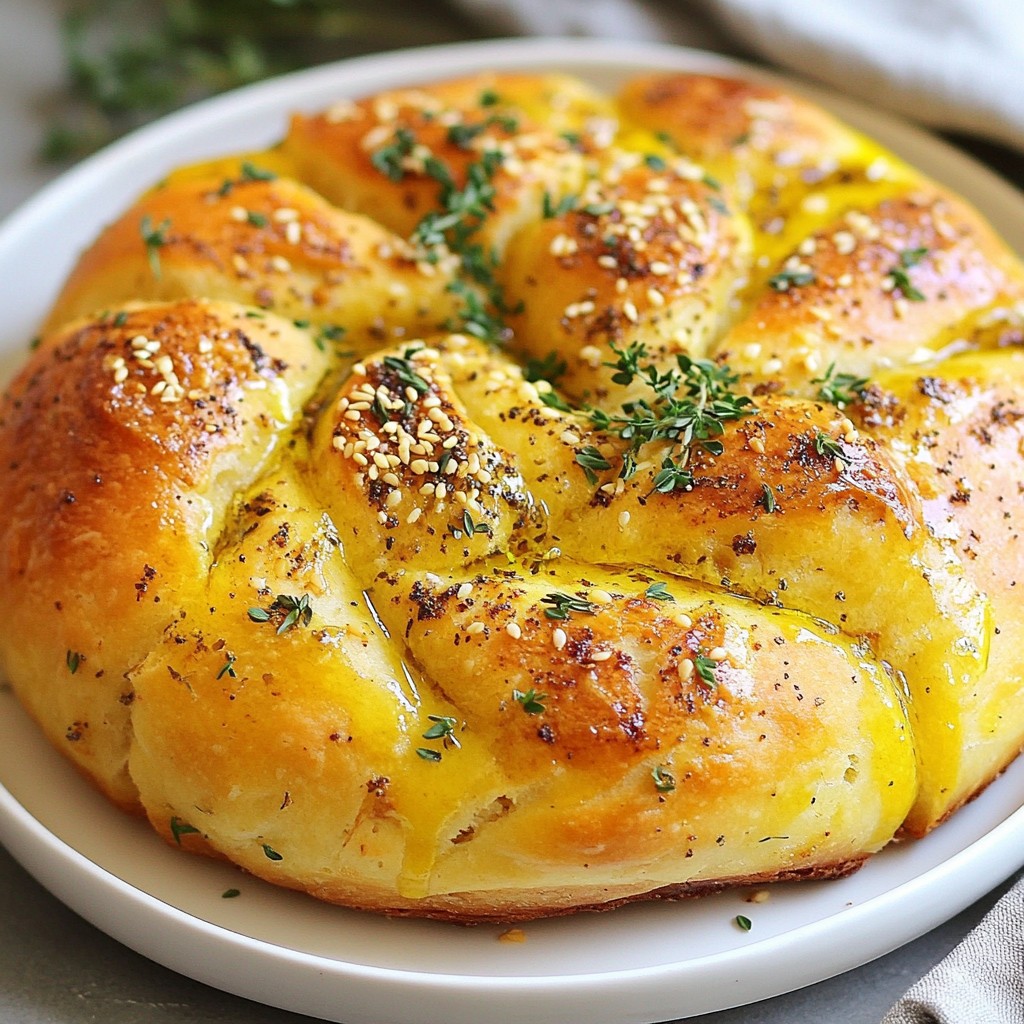
Ready to bake a delicious bread with no kneading? This No-Knead Turkish Skillet Bread is simple and packed with flavor. With just a few basic ingredients and a little patience, you’ll have a warm, golden loaf ready in no time. This recipe is perfect for anyone looking to impress at mealtime or cozy up with homemade bread. Let's dive into this easy step-by-step guide!
Why I Love This Recipe
- Simple and Effortless: This no-knead bread requires minimal effort and no special equipment, making it accessible for any home baker.
- Deliciously Flavorful: The addition of za'atar and sesame seeds introduces a delightful flavor profile that will impress your taste buds.
- Perfect for Sharing: It yields multiple slices, making it an excellent choice for gatherings or family meals.
- Great Texture: The method of cooking in a skillet results in a beautifully crispy crust while keeping the interior soft and airy.
Ingredients
List of Essential Ingredients
- 3 cups all-purpose flour
- 1 ½ teaspoons salt
- 1 packet (2 ¼ teaspoons) instant yeast
- 1 tablespoon sugar
- 1 ¼ cups warm water
- 2 tablespoons olive oil
Optional Ingredients for Enhanced Flavor
- 1 tablespoon za'atar spice blend (plus more for garnishing)
- Sesame seeds for topping
- Fresh herbs (such as thyme or parsley) for garnish
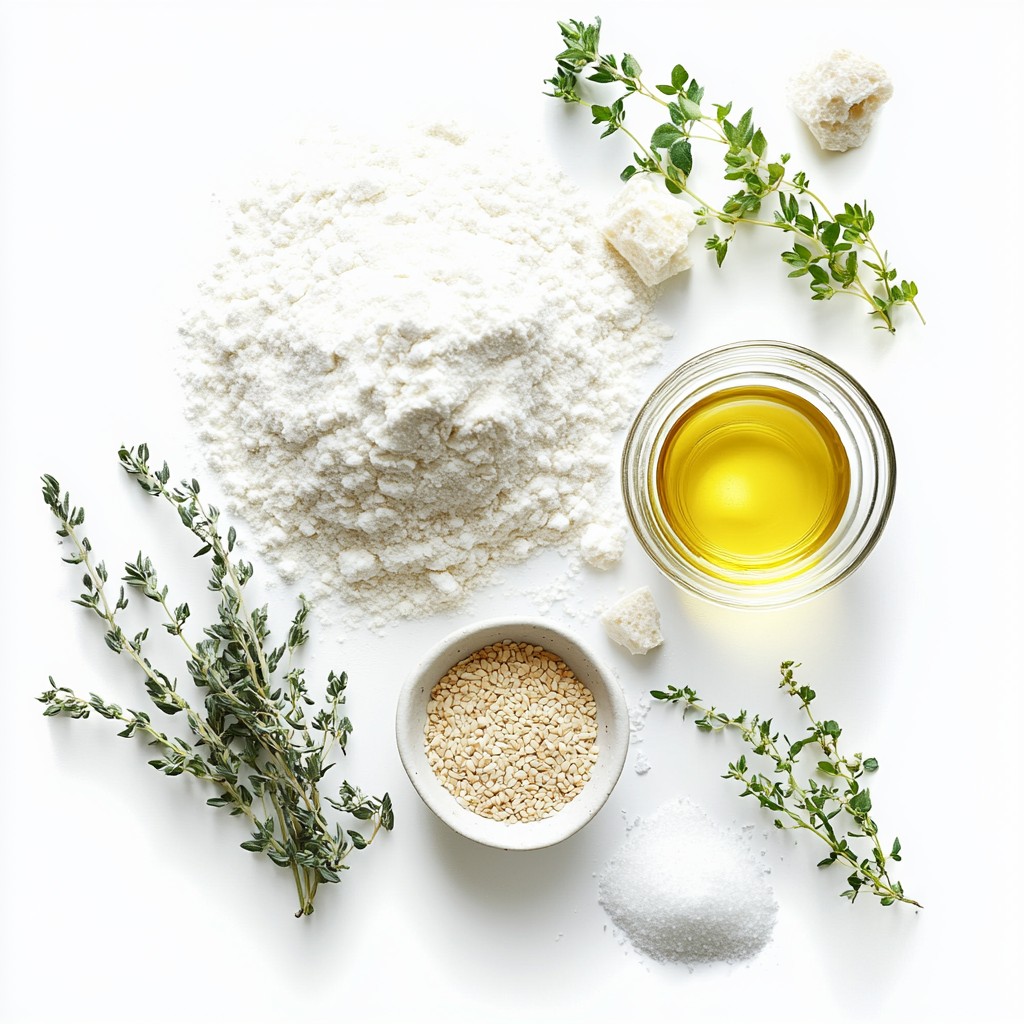
In this recipe, you need simple ingredients. Start with three cups of all-purpose flour. This is the base of your bread. Add one and a half teaspoons of salt. Salt adds flavor and helps with the dough's rise. Next, grab a packet of instant yeast. This will help your dough grow. You also need one tablespoon of sugar. Sugar feeds the yeast and gives a nice taste.
Warm water is key, so use one and a quarter cups. Aim for a temperature around 110°F. This warmth helps the yeast to work better. Finally, add two tablespoons of olive oil. This makes the bread soft and tasty.
For extra flavor, consider adding one tablespoon of za'atar spice blend. It's a mix of herbs that will make your bread special. Sesame seeds also add a nice crunch on top. You can finish with fresh herbs like thyme or parsley for color and flavor.
Step-by-Step Instructions
Prepare the Dough
First, grab a large mixing bowl. In this bowl, combine 3 cups of all-purpose flour, 1 ½ teaspoons of salt, 1 packet of instant yeast, and 1 tablespoon of sugar. Use a whisk or fork to mix these dry ingredients well. This step helps ensure even flavor.
Next, slowly add 1 ¼ cups of warm water. The water should feel warm to your touch but not hot. Stir the mixture with a wooden spoon until you have a sticky dough. It’s okay if the dough looks a bit lumpy. Do not over-mix it; just combine until it comes together.
Let the Dough Rise
After mixing, drizzle 2 tablespoons of olive oil over the top of the dough. Cover the bowl with a clean kitchen towel or plastic wrap. Let it rest at room temperature for about 2 hours. You want the dough to double in size and look bubbly. This step is key for a light and airy bread.
Cooking the Bread
Once the dough has risen nicely, it's time to cook. Place a non-stick or cast-iron skillet on the stove. Preheat it over medium heat.
Next, lightly flour a clean surface. Gently pour the dough onto it. With floured hands, shape the dough into a round loaf. Remember, do not knead it. You want to keep that airy texture.
Carefully transfer the shaped dough into the hot skillet. Cover the skillet with a lid or aluminum foil. This helps create steam, which gives the bread a nice, crispy crust.
Cook the bread for 8-10 minutes until the bottom is golden brown. Use a spatula to flip the bread over and cover it again. Let it cook for another 5-8 minutes until fully cooked and golden on both sides.
Once done, remove the skillet from the heat. Brush the top with olive oil and sprinkle with za'atar and sesame seeds. Let it cool for a few minutes. Then, garnish with fresh herbs like thyme or parsley before serving. Enjoy your warm bread with dips or as a side dish!
Tips & Tricks
Achieving the Perfect Texture
To know when your dough has risen enough, look for the volume. The dough should double in size and look bubbly on top. If it has not changed much, give it more time. The warm water helps activate the yeast.
Avoid over-mixing the dough. It should be sticky and shaggy. A few lumps are fine. Too much mixing can make the bread tough. Gently stir until combined and stop there.
Cooking Techniques
Choose the right skillet for cooking. A cast-iron skillet holds heat well and gives a nice crust. A non-stick skillet is easier for flipping. Both will work, so pick what you have.
Keep the heat at medium. Too high can burn the bread, while too low may leave it raw inside. If you see smoke, lower the heat. Test a small piece if unsure.
Enhancements for Flavor
If you don't have za'atar, try other spices. A mix of oregano and thyme works well. You can also use garlic powder for a kick.
For added flavor, sprinkle on some cheese or olives before cooking. Fresh herbs like parsley or thyme can give a fresh taste. Be creative and mix flavors you love!
Pro Tips
- Use Fresh Yeast: For the best flavor and texture, opt for fresh yeast rather than instant. It will enhance the bread's rise and make it fluffier.
- Don’t Skip the Olive Oil: Brushing the top of the bread with olive oil before adding za'atar and sesame seeds not only adds flavor but also helps the toppings adhere better.
- Monitor the Heat: Cooking on medium heat is crucial. If the heat is too high, the bread may brown too quickly on the outside while remaining doughy inside.
- Experiment with Toppings: Feel free to get creative with your toppings! Try adding different herbs or seeds for a unique twist on this classic bread.
Variations
Vegan and Dairy-Free Adjustments
For a vegan version, you can easily swap olive oil with any plant-based oil. Sunflower or avocado oil works well. Both oils add a nice flavor without dairy.
For toppings, consider using dairy-free options like hummus or avocado spread. These add creaminess without any animal products. Fresh veggies like tomatoes or cucumbers also make great toppings.
Herb and Spice Modifications
You can change up the herbs in this bread. Fresh rosemary or dill can create a unique taste. Try using garlic powder or onion powder for an extra kick.
Mix herbs with spices like cumin or paprika for a bold flavor. You can create your own spice blend, too. Just remember to keep it balanced so the bread shines through.
Bread Shape and Size Options
If you want smaller pieces, try making mini versions. Shape the dough into small rounds for quick bites. Cook them for about 5-7 minutes on each side.
You can also make flatbreads or sticks. Just flatten the dough more before cooking. Adjust the cooking time to ensure they cook through without burning.
Storage Info
Best Practices for Storing Bread
To keep your no-knead Turkish skillet bread fresh, wrap it well. Use plastic wrap or aluminum foil. You can also place it in a paper bag. Store it at room temperature for best results. Avoid putting it in the fridge, as this can make it dry out quickly.
Freezing Instructions
Freezing your bread is easy! Follow these steps:
1. Allow the bread to cool completely.
2. Wrap it tightly in plastic wrap or aluminum foil.
3. Place the wrapped bread in a freezer bag.
4. Label it with the date for easy tracking.
When you're ready to eat it, take it out and let it thaw at room temperature. For a warm finish, pop it in the oven at 350°F for about 10 minutes.
Best Consumption Timeline
This bread is best enjoyed fresh. It stays fresh for about 2 to 3 days at room temperature. After that, it may start to lose its soft texture. If frozen, it can last up to 3 months. Just remember to wrap it well to avoid freezer burn.
FAQs
What is the difference between skillet bread and regular bread?
Skillet bread cooks differently than regular bread. Regular bread usually bakes in an oven. Skillet bread cooks on the stovetop. This method allows for a nice crust and soft inside. You get a quick and easy bread with less fuss. The skillet also makes it great for a last-minute side dish. You can enjoy that fresh bread smell without waiting for the oven to heat up.
Can I use whole wheat flour instead of all-purpose flour?
Yes, you can use whole wheat flour. It will change the texture and flavor a bit. Whole wheat makes the bread denser and adds a nutty taste. You might want to add a little more water, too, since whole wheat absorbs more moisture. Start with a 1:1 swap, then adjust as needed. Don’t be afraid to experiment to find your favorite mix.
How can I tell when the bread is done cooking?
To check if the bread is done, tap the bottom with your fingers. It should sound hollow. You can also look for a golden-brown color on both sides. If you want to be sure, use a food thermometer. The inside should be around 200°F (93°C). Let it cool for a few minutes, then slice. Enjoy the warm, tasty bread!
This post covered all you need to know to make skillet bread. You learned the essential and optional ingredients, along with step-by-step instructions. I shared tips to achieve the best texture and discussed methods to enhance flavors. You also discovered variations and storage tips for freshness.
Try making this bread today! Enjoy its taste and share it with friends. You'll impress everyone with your new skill!