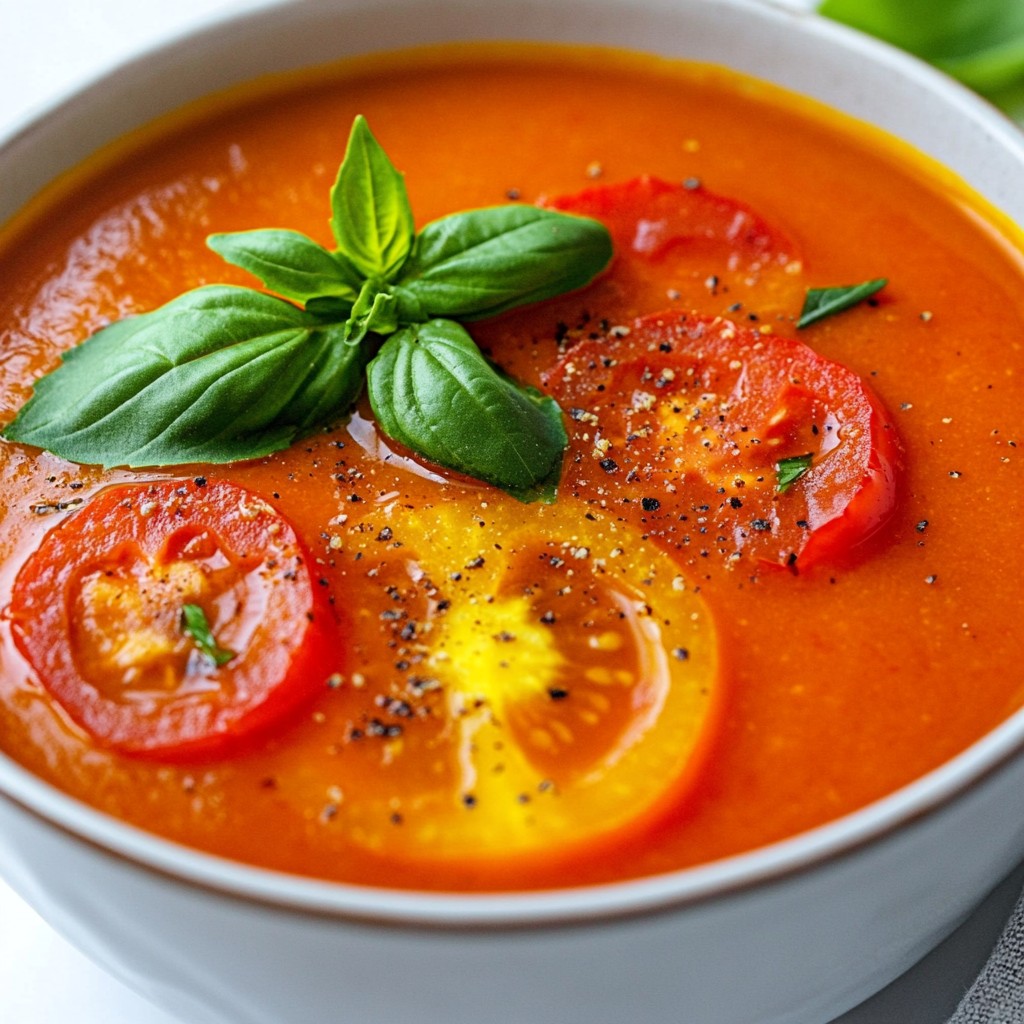
Looking for a warm and tasty dish? This Roasted Tomato Pepper Soup is both delicious and simple to make. With easy steps and fresh ingredients, you can whip up a comforting meal in no time. Plus, I’ll share tips to customize flavors and storage ideas. Get ready to impress your family and friends with this amazing soup recipe. Let’s dive in!
Why I Love This Recipe
- Incredible Flavor: The combination of roasted tomatoes and bell peppers creates a rich, smoky flavor that’s utterly irresistible.
- Healthy Ingredients: This soup is packed with fresh vegetables, making it a nutritious option for any meal.
- Easy to Make: With minimal prep and cooking time, this recipe is perfect for busy weeknights.
- Versatile Dish: Enjoy it as a starter, a light lunch, or paired with crusty bread for a hearty dinner.
Ingredients
Complete List of Ingredients
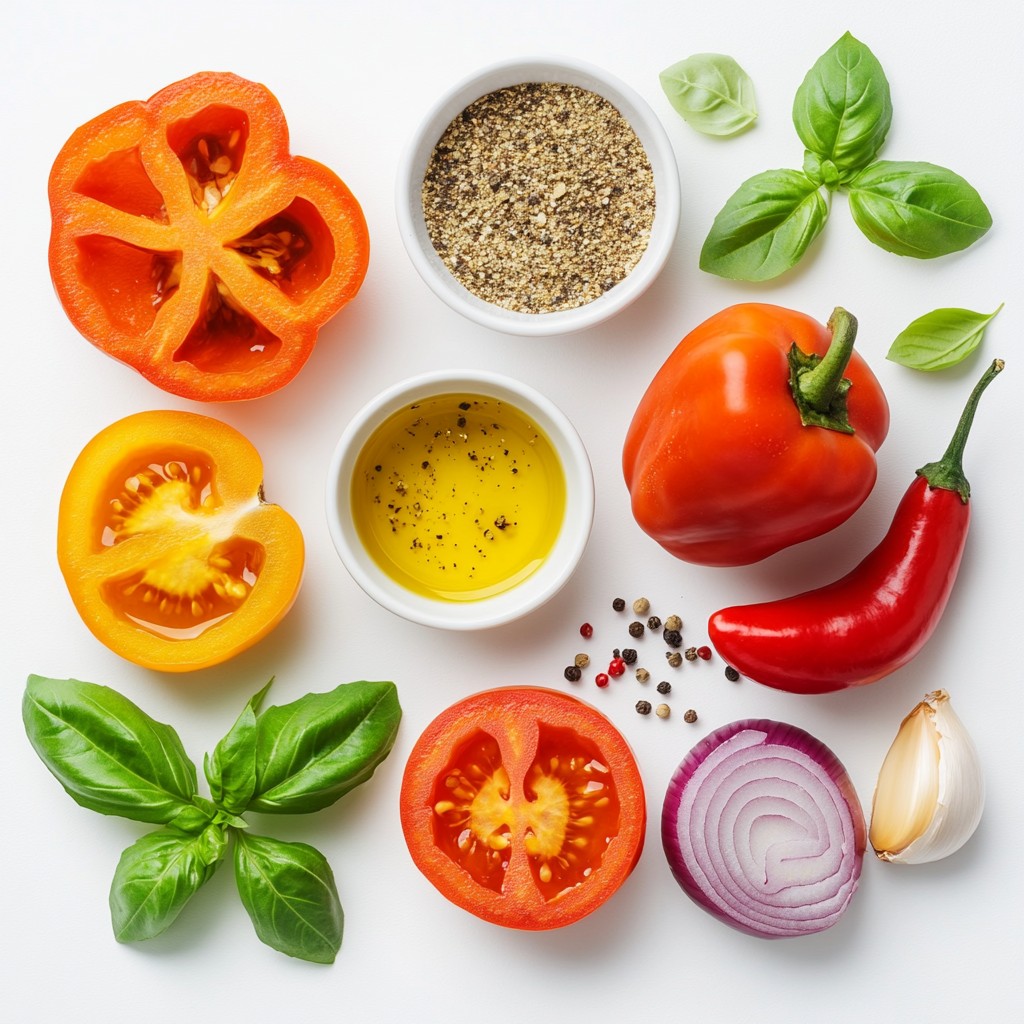
To make roasted tomato pepper soup, gather these fresh ingredients:
- 6 ripe tomatoes, halved
- 2 red bell peppers, quartered
- 1 large yellow onion, chopped
- 4 cloves garlic, peeled
- 3 cups vegetable broth (homemade or store-bought)
- 1 teaspoon smoked paprika
- 1 teaspoon dried oregano
- 2 tablespoons extra-virgin olive oil
- Salt and freshly cracked black pepper, to taste
- Fresh basil leaves for garnish
Suggested Ingredient Substitutions
You can swap out some ingredients if needed:
- Use yellow or green bell peppers instead of red for a different flavor.
- Swap yellow onion for a sweet onion for a milder taste.
- If you like a spicy kick, add a jalapeño or serrano pepper.
- For a creamier soup, add a splash of coconut milk or heavy cream.
Seasoning Variations
Feel free to mix up the seasonings to suit your taste:
- Add a pinch of red pepper flakes for heat.
- Use thyme or rosemary instead of oregano for herbal notes.
- Experiment with lemon juice or zest for a bright finish.
- Try adding a splash of balsamic vinegar for depth and sweetness.
These options let you customize your soup while keeping it simple and delicious!
Step-by-Step Instructions
Preheating the Oven
Start by preheating your oven to 400°F (200°C). This temperature helps the vegetables roast evenly. A hot oven is key for that great roasted flavor. Make sure the oven is fully heated before you place the vegetables inside.
Roasting the Vegetables
Next, take a large baking sheet. Arrange the halved tomatoes, quartered red bell peppers, chopped onion, and peeled garlic cloves on it. Drizzle everything with extra-virgin olive oil. Then season well with salt, freshly cracked black pepper, smoked paprika, and dried oregano. Use your hands or a spatula to toss the veggies. This step ensures they are well-coated.
Now, place the baking sheet in your preheated oven. Roast the veggies for 30 to 35 minutes. They should be tender and have a nice char. Look for a golden color and a fragrant smell. This roasting brings out their natural sweetness.
Blending the Soup
After roasting, carefully transfer the vegetables to a high-speed blender. If you prefer, you can use an immersion blender in a large pot. Next, pour in the vegetable broth. Blend on high until the mixture is smooth and creamy. If you want some chunks, blend for a shorter time or pulse a few times.
Once blended, transfer the soup back to a pot. Warm it over medium heat. Taste the soup and adjust seasoning with more salt or black pepper if needed. Serve the soup hot in bowls. Top with fresh basil leaves for a nice touch. Enjoy this simple, tasty soup!
Tips & Tricks
How to Achieve the Perfect Roasted Flavor
To get that tasty roasted flavor, use fresh, ripe tomatoes and sweet red peppers. When you toss them in olive oil, make sure they are well-coated. Roasting at 400°F (200°C) brings out natural sugars. Let them roast until they are golden and fragrant. This usually takes about 30 to 35 minutes. Keep an eye on them, as the perfect char adds depth to your soup.
Adjusting the Consistency of the Soup
Blending the soup gives it a smooth texture. If you want it thick, blend less. For a chunkier feel, pulse the blender a few times. If the soup is too thick, add more vegetable broth until you reach the desired consistency. Taste and adjust with salt and pepper if needed. This step can make a big difference, so don’t skip it!
Serving Suggestions and Presentation Tips
Serve the soup hot in bowls. A touch of fresh basil on top adds color and flavor. For a fancy touch, drizzle some extra olive oil on each bowl. You can also sprinkle a bit of smoked paprika for a pop of color. This small detail makes your dish look restaurant-worthy and tastes great! Enjoy your meal with crusty bread for dipping.
Pro Tips
- Use Ripe Tomatoes: The sweeter and more flavorful your tomatoes are, the better your soup will taste. Look for tomatoes that are firm yet slightly soft to the touch.
- Experiment with Herbs: Fresh herbs can elevate the flavor of your soup. Try adding thyme or rosemary for a different aromatic profile.
- Adjust Consistency: If you prefer a creamier soup, add a splash of coconut milk or cream after blending for richness. For a lighter version, simply add more broth.
- Garnish Creatively: Besides basil, consider topping with croutons, a dollop of yogurt, or a drizzle of balsamic glaze for added texture and flavor.
Variations
Adding Proteins (e.g., Chicken, Beans)
You can make your roasted tomato pepper soup heartier by adding proteins. Cooked chicken adds a nice texture and flavor. Simply shred the chicken and stir it in after blending the soup. You can also use beans for a plant-based option. Canned beans work well; just rinse and add them in before blending. Both options boost protein and make the soup more filling.
Vegetarian and Vegan Options
This soup is naturally vegetarian. For a vegan version, ensure your broth is plant-based. You can also add nutritional yeast for a cheesy flavor without using dairy. This adds depth and richness to the soup. Serve with crusty bread for a complete meal.
Spice Level Adjustments
If you like heat, add some spices to your soup. Red pepper flakes or a dash of cayenne pepper can give it a nice kick. Start small, then taste and adjust as needed. If you prefer mild flavors, skip the extra spices. The roasted veggies already give a warm, rich taste. You can also use fresh herbs like cilantro or parsley for a fresh twist.
Storage Info
How to Store Leftovers
To store leftovers, let the soup cool first. Pour it into an airtight container. Seal it well and place it in the fridge. It will stay fresh for about 3 to 4 days. When you want to eat it, just reheat on the stove until hot.
Freezing Instructions
If you want to freeze the soup, use a freezer-safe container. Make sure to leave some space at the top. The soup expands when it freezes. It can last up to 3 months in the freezer. To thaw, move it to the fridge overnight. Reheat it on the stove before serving.
Shelf Life Tips
Always check for signs of spoilage before eating. If the soup smells off or has a strange color, throw it away. For the best taste, try to eat the soup within a week if kept in the fridge. Freezing is a great way to keep it longer.
FAQs
What If I Don't Have a Blender?
If you don't have a blender, you can still make this soup. Use a fork or potato masher to crush the roasted vegetables in a pot. Stir in the vegetable broth as you mash. This method gives the soup a chunkier texture. If you have an immersion blender, that works great too. It makes blending easy right in the pot!
Can I Use Canned Tomatoes Instead?
Yes, you can use canned tomatoes. Choose whole or diced canned tomatoes for best results. Drain them well and add them to the pot. Skip the roasting step, as canned tomatoes are already cooked. Just simmer them with the other ingredients. This saves time but may change the flavor a bit.
Is Roasted Tomato Pepper Soup Healthy?
Roasted tomato pepper soup is healthy and full of nutrients. It uses fresh vegetables like tomatoes and bell peppers, which are low in calories. The soup is also rich in vitamins A and C. Olive oil adds healthy fats and flavor. You can adjust the oil to make it lighter if desired.
This blog post provided a complete guide to roasted tomato pepper soup. You learned about the ingredients needed and how to make delicious substitutions. I shared step-by-step instructions for making the soup, along with tips for flavor and serving. You also discovered variations, including adding proteins and adjusting spice levels. Finally, you received storage advice for leftovers.
Now you can enjoy this easy, tasty dish at home. Get cooking!