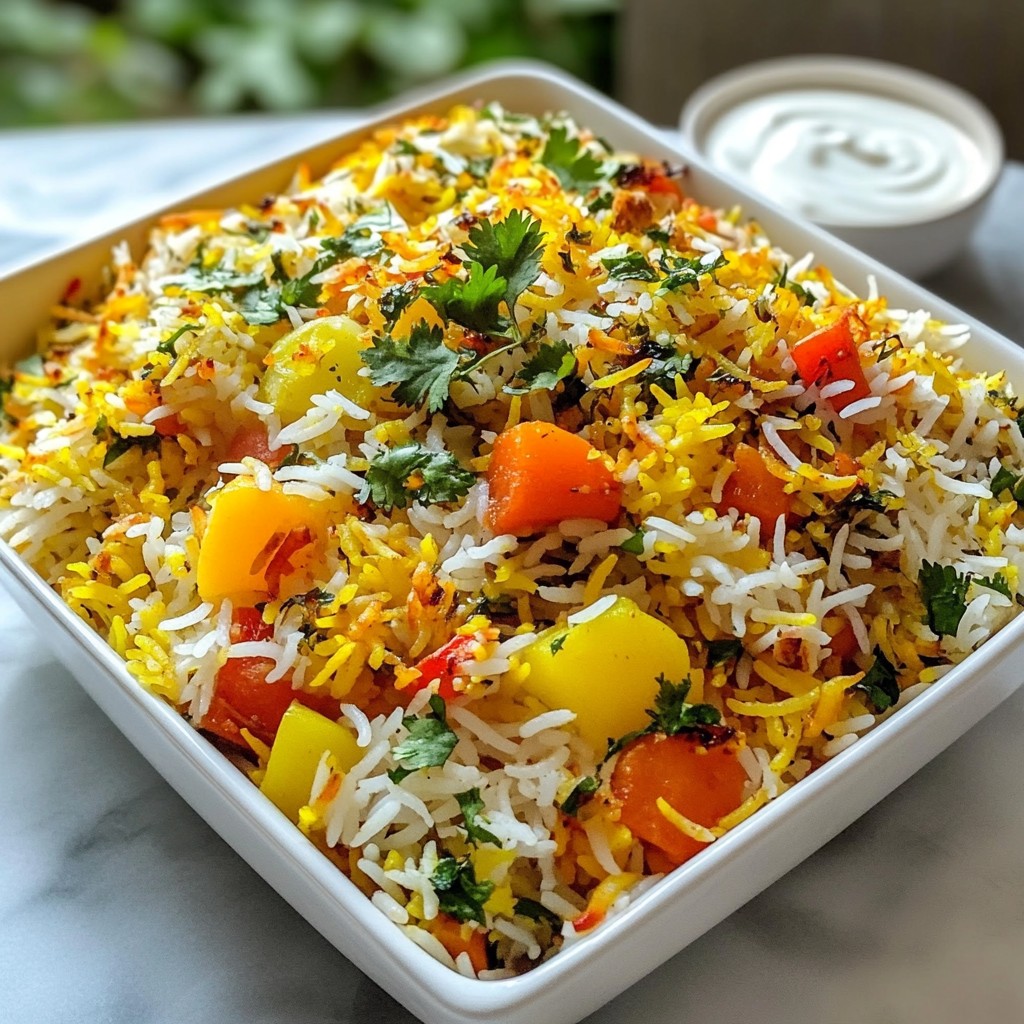
Are you ready to bring vibrant flavors to your kitchen? In this guide to Vegetable Biryani, I’ll show you how to create a colorful, hearty dish that bursts with taste. You'll learn the key ingredients, simple steps, and tips for perfecting this classic recipe. Whether you’re a novice chef or a seasoned cook, this post will help you serve up a delightful meal everyone will love. Let’s dive in!
Why I Love This Recipe
- Flavorful Layers: This biryani is packed with a medley of spices and fresh herbs, creating a complex flavor profile that is both zesty and aromatic.
- Nutritious Ingredients: With a variety of vegetables and the goodness of basmati rice, this dish is not only delicious but also provides a balanced meal.
- Easy to Prepare: Despite its rich flavors, this recipe is straightforward and does not require any advanced cooking skills, making it accessible for everyone.
- Perfect for Sharing: This dish serves up to four, making it an ideal choice for family gatherings or dinner parties where you want to impress your guests.
Ingredients
Main Ingredients
- 2 cups basmati rice
- 1 cup mixed vegetables (carrots, peas, green beans)
- 1 teaspoon cumin seeds
- 1 teaspoon garam masala
- 1 teaspoon turmeric powder
Additional Ingredients
- 1 medium onion, thinly sliced
- 2 medium tomatoes, chopped
- 3-4 green chilies, slit lengthwise
- 2-3 cloves garlic, minced
- 1-inch piece of ginger, freshly grated
- 1/4 cup fresh cilantro, roughly chopped
- 1/4 cup fresh mint leaves, roughly chopped
Cooking Essentials
- 3 tablespoons vegetable oil or ghee
- 1/4 cup plain yogurt
- Salt to taste
- 4 cups water
When making vegetable biryani, you want to pick fresh and colorful ingredients. Basmati rice is key for that fluffy texture. Mixed vegetables like carrots, peas, and green beans add color and flavor.
Aromatic spices make this dish special. You’ll use cumin seeds, garam masala, and turmeric for warmth and depth.
Onions and tomatoes create a sweet and tangy base. Garlic, ginger, and green chilies give a nice kick. Fresh herbs like cilantro and mint add brightness.
Don’t forget cooking essentials! You need vegetable oil or ghee for frying. A bit of yogurt adds creaminess, while salt and water help balance the flavors.
Each ingredient plays a part in making your biryani delicious and fragrant. So, gather these ingredients and get ready to cook!

Step-by-Step Instructions
Preparing the Rice
First, rinse the basmati rice well under cold water. Keep rinsing until the water runs clear. This step helps remove excess starch. It stops the rice from being sticky. After rinsing, soak the rice in fresh water for about 30 minutes. Soaking makes the rice fluffy and tender. Drain the rice once it's soaked.
Cooking the Base
In a large pot, heat vegetable oil or ghee on medium heat. Add cumin seeds and let them sizzle for a few seconds. This brings out their great flavor. Then, add the thinly sliced onion. Sauté the onion until it turns golden brown. This should take about 8 to 10 minutes. The golden color adds depth to your biryani. Next, stir in minced garlic, grated ginger, and slit green chilies. Cook this mix for 2 minutes until fragrant.
Combining Ingredients
Now, add the chopped tomatoes to the pot. Cook them until they soften and break down, about 5 minutes. Then, mix in the chopped mixed vegetables and green bell pepper. Cook for another 5 to 7 minutes. The veggies should soften but still keep some crunch. Sprinkle in turmeric powder, garam masala, and salt. Stir well and cook for an additional 2 minutes. This melds the spices together nicely. Lower the heat and add plain yogurt, cilantro, and mint leaves. Mix gently to combine.
Cooking the Biryani
Pour in 4 cups of water and bring the mix to a boil. Stir occasionally to prevent sticking. Once boiling, add the drained rice. Gently stir to spread the rice evenly. Reduce the heat to low and cover the pot with a lid. Let it simmer for 20 minutes without lifting the lid. This allows the rice to cook perfectly. After 20 minutes, take the pot off the heat but keep it covered for another 10 minutes. This resting time helps flavors develop. Finally, fluff the biryani with a fork to separate the grains. Serve hot, garnished with fresh mint if desired.
Tips & Tricks
Selecting Ingredients
- Best vegetables for biryani: I like to use carrots, peas, and green beans. These veggies add color and taste. You can use seasonal vegetables too, like bell peppers or zucchini. They fit well into the dish.
- Choosing the right basmati rice: Always select long-grain basmati rice. It offers a fluffy texture and great flavor. Rinse it well to remove extra starch. This step helps keep the rice separate and not sticky.
Cooking Tips
- Preventing sticky rice: Soaking the rice for 30 minutes is key. This process helps the grains absorb water and swell. Drain it well before adding to the pot. Stir gently while cooking to avoid clumping.
- Adjusting spice levels: If you prefer milder flavors, use fewer green chilies. You can always add more later. Taste as you go to ensure it fits your palate. Cooking should be fun and enjoyable.
Presentation Suggestions
- Garnishing ideas: To make your biryani look amazing, sprinkle fresh cilantro and mint leaves on top. For added flair, you can add fried onions. They give a nice crunch and flavor contrast.
- Serving accompaniments: Pair your biryani with raita or yogurt sauce. This cools down the spices and adds creaminess. You could also serve it with a fresh salad for a refreshing side. Enjoy your beautiful dish!
Pro Tips
- Soak the Rice: Soaking the basmati rice for at least 30 minutes helps it cook evenly and ensures that each grain remains separate and fluffy.
- Layering Flavors: Each step of sautéing the onions, garlic, and spices builds layers of flavor, so take your time to get them golden and fragrant before adding other ingredients.
- Steam Cooking: After simmering, allow the biryani to rest covered for 10 minutes. This helps the flavors meld and the rice to finish steaming perfectly.
- Garnishing: For a beautiful presentation, garnish with fresh cilantro and mint just before serving. This not only adds color but also enhances the aroma.
Variations
Alternative Vegetables
You can swap vegetables based on the season. Try zucchini or bell peppers in summer. In fall, use squash or root veggies. This keeps your biryani fresh and fun. You can also add protein to your dish. Chickpeas or paneer boost the flavor and nutrients. They make the meal heartier and more filling.
Spice Adjustments
You can change spice levels to match your taste. If you like it hot, add more green chilies. For a milder dish, use fewer chilies. You can also try different spice blends from regions. For example, use a South Indian mix for a unique twist. Each blend adds its own charm to the biryani.
Cooking Methods
Want to save time? Use an Instant Pot or pressure cooker. It cooks the biryani faster while keeping it tasty. Just follow the same steps with adjusted cooking times. You can also bake the biryani in the oven. Layer ingredients in a dish, cover, and bake until the rice is fluffy. This method gives a nice texture and flavor.
Storage Info
Storing Leftovers
To store leftover vegetable biryani, let it cool first. Place it in an airtight container. Store it in the fridge. It will stay fresh for about three to four days. When reheating, use a microwave or stove. Add a splash of water to keep it moist. Cover it to trap steam while heating. Stir halfway through to heat evenly.
Freezing Biryani
If you want to freeze biryani, let it cool completely first. Divide it into portions for easy thawing. Use freezer-safe bags or containers. Label them with dates to track freshness. It can last up to three months in the freezer.
To thaw, move it to the fridge overnight. Reheat it directly from the fridge. Add a little water, cover, and heat until hot.
Shelf Life
Vegetable biryani lasts about three to four days in the fridge. Check for signs of spoilage before eating. If it smells sour or looks dry, it’s best to discard it. Always trust your senses.
FAQs
What type of rice is best for vegetable biryani?
For vegetable biryani, basmati rice is the best choice. It has long grains and a lovely aroma. Basmati rice cooks light and fluffy. Other rice types can become sticky and mushy. This can affect the texture of your biryani. I recommend using aged basmati for the best flavor and texture.
Can I make vegetable biryani ahead of time?
Yes, you can make vegetable biryani ahead of time. To do this, cook the biryani as usual and let it cool. Store it in an airtight container in the fridge. This helps keep the flavors rich. When you're ready to eat, reheat it in a pot or microwave. Add a splash of water to keep it moist while reheating.
What can I serve with vegetable biryani?
You can serve vegetable biryani with many tasty sides. A cooling raita pairs well with the spices. You can also add a fresh salad for crunch. Naan or roti can be great for scooping the biryani. Try serving some pickles for an extra kick.
In summary, this article explores how to make a tasty vegetable biryani. We covered ingredients, including basmati rice and fresh herbs, and detailed step-by-step cooking instructions. I shared valuable tips for choosing the right veggies and cooking methods, plus storage info for leftovers. Remember, biryani adapts easily, so feel free to switch ingredients or adjust spices. With this guide, you can create a delicious meal that delights everyone. Enjoy cooking and savor every bite of your biryani!